XIANG LAB · SUN YAT-SEN UNIVERSITY

Precision Exposure & Environmental Health

Sensing Environment. Understanding Exposure. Protecting Health.

We study how environmental exposures shape health. We develop wearable and portable sensors that measure air pollutants, light, noise and physiological signals at the individual level, combine them with multi-city cohorts to resolve the effects of complex exposures on sleep, mental health and metabolism, and translate these measurements into actionable interventions in indoor environments and daily behavior.

ENVIRONMENT FIELDPERSONAL EXPOSURESENSOR NODESPHYSIOLOGICAL SIGNALHUMAN
Schematic · human – environment – sensor · From wearable sensing to population health

02 / RESEARCH

What we study

Three connected directions: measuring what people are actually exposed to, understanding how exposure shapes health, and designing environments that protect it.

01

Precision Exposure & Health Sensing

We develop wearable and portable sensing systems and exposure models that capture what individuals actually breathe, see, hear and experience, rather than what a fixed monitor records.

  • Wearable sensing
  • Personal exposure
  • Low-cost sensors
  • Exposure modelling

Sensing → Exposure

More on this direction →
02

Exposomics & Human Health

We link multi-media exposure measurements with biomarkers and health outcomes in large cohorts, resolving how complex mixtures act on sleep, mental health and cardiometabolic risk.

  • Exposomics
  • Mixture exposure
  • Metabolomics
  • Biomonitoring

Exposure → Response → Health

More on this direction →

03

Healthy Building Environments

We characterize indoor sources such as cooking emissions, evaluate ventilation and air cleaning, and design building environments that actively support health rather than merely satisfy comfort standards.

  • Indoor air
  • Cooking emissions
  • Air-cleaning intervention
  • Healthy buildings

Environment → Intervention

More on this direction →

03 / RESEARCH FRAMEWORK

From environmental signals to human health.

How the three directions connect into a single line of enquiry.

  1. Environment
  2. Sensing
  3. Exposure
  4. Biological response
  5. Health
  6. Intervention
AI / Data Science across the chain

AI and data science span the entire chain.

Measure what people are actually exposed to, explain how that exposure shapes health, and turn the findings into interventions that can be implemented.

Measurement before modelling; real-world problems first; rigorous and reproducible methods; open data and tools.

04 / SELECTED RESEARCH

What we are doing now

Current efforts across devices, cohorts and methods.

Eco-Tracker wearable device rendering

01DevicePrecision Exposure

Eco-Tracker: A Wrist-Worn Personal Exposure Monitor

A wrist-worn device that records a person's environment and physiology at the same time.

A wrist-worn multi-parameter personal exposure monitor designed for large populations. It synchronously records particulate matter, temperature and humidity, light, sound and physiological signals, supported by personal exposure modelling and quality-control workflows that bring laboratory-grade measurement into real-life settings.

Device details →

02CohortExposomics & Health

A Nationwide Multi-City Cohort of Environmental Exposure and Mental Health in University Students

Environmental exposure, sleep and mental health across 261 Chinese cities.

A cross-sectional cohort of university students in 261 Chinese cities, systematically collecting indoor environment, consumer-product use, sound and light exposure, and outcomes including sleep, depression and anxiety. It has produced a series of papers on air pollution and sleep disturbance, and indoor consumer products and mental health.

03MethodHealthy Buildings

Characterising and Intervening on Indoor Cooking Emissions and Ultrafine Particles

Large-scale characterisation of cooking particles with low-cost sensors and computer vision.

Combining low-cost sensors with computer vision to characterise residential cooking-generated particles at scale, and evaluating how ventilation and air cleaning reduce indoor concentrations and personal exposure. The related method has been granted a national invention patent.

04MethodPrecision Exposure

Health Sensing with EEG and fNIRS

Objective measures of sleep and mood from wearable neurophysiological signals.

Exploring resting-state EEG and functional near-infrared signals for depression and anxiety screening and sleep-quality assessment, developing channel selection and lightweight algorithms that provide objective physiological indicators for the health effects of environmental exposure.

05 / RESEARCH INFRASTRUCTURE

How we do it

The instruments, cohorts and methods behind the work.

01

Wearable & Environmental Sensing

Wrist-worn multi-parameter exposure devices; portable low-cost gas and particle sensors; personal exposure modelling and calibration workflows.

Turning ambient concentration into real personal exposure.

02

Population Cohorts

Nationwide multi-city university-student cohort; indoor environment and health follow-up; multi-centre prospective cohorts.

Large samples and real-world settings for exposure–health relationships.

03

Exposomics & Biomarkers

Multi-media exposure measurement; passive wristband sampling and urinary biomonitoring; metabolomics and inflammatory markers.

From external exposure to internal dose and mechanism.

04

Data Science & AI

Exposure field modelling; machine learning and computer vision; multimodal signal fusion; uncertainty quantification.

Turning measurements into models that can be reasoned with.

06 / PUBLICATIONS

What we have found

View all publications
  1. 2026Environmental Science & Technology

    Beyond Residential Ambient Concentrations: Quantifying Exposure Error and Advancing Personal PM2.5 Prediction with a Scalable Modeling Framework

    Dai X, Zhang R, Li Q, …, Xiang J*.

    01Precision Exposure & Health Sensing

    DOI ↗
  2. 2025Building and Environment

    Indoor Use of Consumer Chemical Products and Its Link to Depression and Anxiety among College Students in 297 Chinese Cities

    Su K, Wang C, Hu L, …, Xiang J*.

    02Exposomics & Human Health

    DOI ↗
  3. 2024Science of The Total Environment

    A Novel Approach for Large-Scale Characterization of Residential Cooking-Generated PM with Computer Vision and Low-Cost Sensors

    Su K, Fang X, Wu S, …, Xiang J*.

    01Precision Exposure & Health Sensing

    DOI ↗
  4. 2026Environmental Science & Technology

    Ozone Exposure (Outdoor–Indoor–Personal) and Mental Health in Young Adults

    Wang C, Zhou R, Yang C, …, Xiang J*.

    02Exposomics & Human Health

    DOI ↗
  5. 2021Environment International

    Impacts of establishing Healthy Building standards for daily PM2.5 in urban China on premature deaths and economic costs: A population-based modeling study

    Xiang, J., Seto, E., Mo, J., Zhang, J.+, Zhang, Y.+,*

    03Healthy Building Environments

    DOI ↗

07 / PEOPLE

Who we are

All members
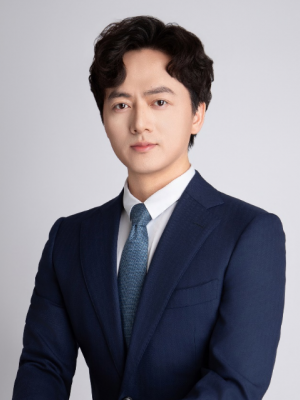
Portrait of Jianbang Xiang

Principal Investigator

Jianbang Xiang, PhD

Associate Professor · Doctoral Supervisor · School of Public Health (Shenzhen), Sun Yat-sen University

An environmental health researcher focused on measuring personal exposure precisely and understanding its health effects.

Dr. Jianbang Xiang is an Associate Professor and doctoral supervisor at the School of Public Health (Shenzhen), Sun Yat-sen University, recognised under China's national young talent program and Shenzhen's Pengcheng Talent Program. He holds a Ph.D. in building technology from Tsinghua University and was a visiting scholar at Duke University and a postdoctoral fellow at the University of Washington. His research focuses on precision exposure measurement and health sensing, exposomics, and healthy building environments, supported by nine funded projects. He has published 57 peer-reviewed papers, including in The Lancet, JAMA Internal Medicine and Environmental Science & Technology, with 34 as first or corresponding author, and holds eight patent applications with three granted. He serves as a youth editorial board member of Building Simulation and reviews for over 50 SCI journals.

08 / LATEST

What is happening now

All news
  1. 2026.01PatentPatent granted: computer-vision characterisation of cooking-generated particulate matter
  2. 2026AwardISIAQ Academy Yaglou Award 2026
  3. 2026PaperOzone Exposure (Outdoor–Indoor–Personal) and Mental Health in Young Adults (ES&T)

09 / JOIN US

Who can join us

Our group offers a structured graduate training program. We have developed the Eco-Tracker wearable device and collected extensive individual environmental and health data through our own cohorts. We welcome students interested in precision exposure measurement, environmental health and intelligent sensing, with two training tracks: applied fundamental research and translation toward real-world deployment.

Contact the Lab

Who is welcome

Master's students · PhD students · Postdocs · Research assistants · Visiting students · Collaborators

Relevant backgrounds

Environmental health · Environmental engineering · Building science · Electronics · Computer science · AI · Biomedical engineering · Epidemiology & biostatistics · Omics

What to send

CV + statement of research interests + transcript

Contact

xiangjb@mail.sysu.edu.cn